Scammers are using hijacked university email accounts to recruit students for fake jobs
Researchers tracked a fraud ring that steals .edu credentials and then uses those trusted accounts to lure students into check and gift-card scams, a pattern Texas campuses can disrupt with MFA and a few well-timed messages.
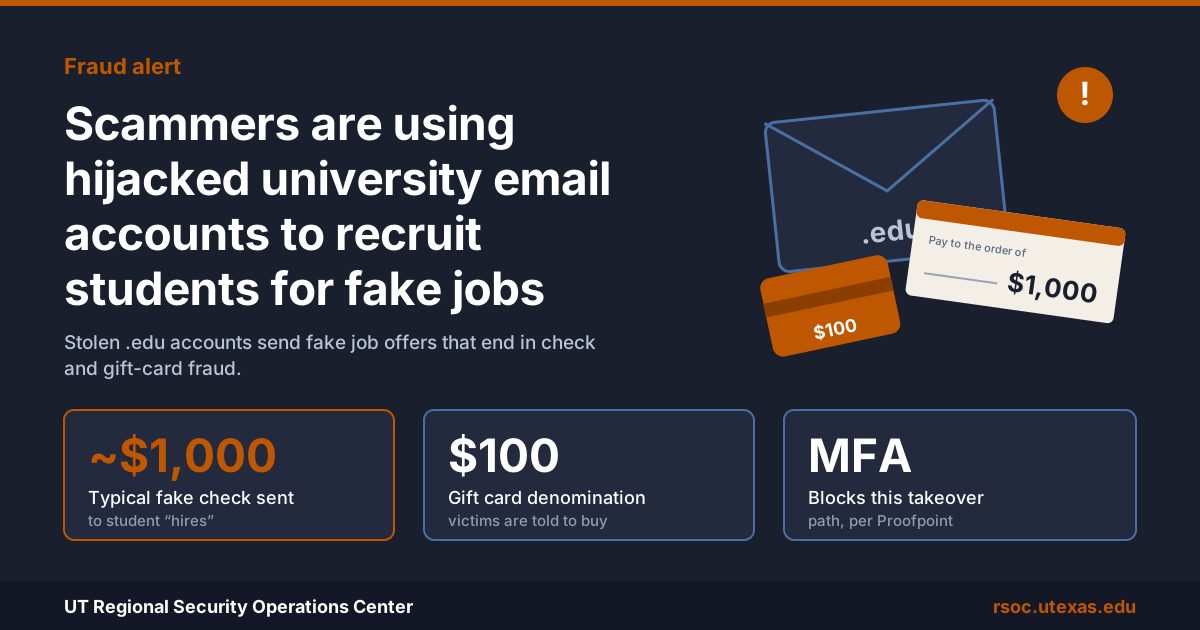
The offer comes from a real university address: remote research assistant, flexible hours, good pay. After a quick "interview" by text message, the new hire receives a check for about $1,000. The instructions are simple, deposit it, keep half as your first paycheck, and use the rest to buy gift cards for "work supplies." A few days later the check bounces. The gift-card codes are long gone, and the student owes the bank the money.
What happened
In research published Sept. 29, Proofpoint described a fraud cluster, suspected to operate from Nigeria, that is systematically targeting U.S. universities. The operation runs in two stages.
First, the group steals accounts. Students, staff, faculty and alumni receive emails warning that their university account is about to be deactivated because of graduation, retirement or a transfer. The link leads to a simple web form that collects their username and password.
Second, the group turns those accounts into recruiting tools. From the compromised mailboxes, the fraudsters send job offers to students and other .edu addresses for roles such as research assistant, personal concierge, remote charity worker and secret shopper. Applicants who bite receive images of checks averaging about $1,000 and are told to buy $100 gift cards and send back the codes. In at least one case, the scammers escalated by impersonating an FBI agent.
Proofpoint found no evidence that the group bypassed multi-factor authentication. The attackers go after the easy targets: accounts that never had MFA turned on.
Why it matters for Texas institutions
Texas colleges and universities enroll well over a million students, and many of them are working their way through school. That makes a well-paid, flexible campus job almost irresistible, especially when the offer appears to come from inside the university.
The stolen accounts themselves are a second problem. A compromised .edu mailbox sends mail that passes every authentication check, so email filters and DMARC policies won't stop it. A single account blasting job lures can also land an institution's mail servers on blocklists and erode student trust in official email.
Higher education also carries a long tail of loosely managed accounts: alumni who keep email for life, retirees, affiliates, guest researchers and student workers who have moved on. Those accounts are least likely to have MFA and most likely to believe a "your account is being deactivated" warning.
What your institution should do
Close your MFA gaps. Require MFA for every account that can send mail, including students, alumni, retirees, sponsored and affiliate accounts. Proofpoint's findings suggest that this alone breaks the scheme.
Retire stale accounts on a schedule. Accounts that no longer need email should not have it. A clear, published deprovisioning process also makes fake "deactivation" notices easier to spot.
Watch for the behavior, not just the login. Alert on accounts that suddenly send large volumes of mail to other .edu recipients, create new inbox rules, or sign in from unusual locations. Automatically disable or throttle accounts showing those patterns until someone reviews them.
Tell students plainly how real jobs work. Partner with career services, student employment and financial aid to deliver a simple message during peak hiring periods. Real campus jobs come through official channels such as Handshake. No legitimate employer sends a check and asks for gift cards.
Make reporting easy and supportive. Give students one place to report suspicious offers. Point anyone who lost money to campus police and the FTC at reportfraud.ftc.gov, without blame.
RSOC can help constituent institutions identify accounts without MFA, tune detections for compromised mailboxes, and develop student-facing awareness messages. Contact the RSOC team at RSOC@utexas.edu or visit rsoc.utexas.edu.